2026 Creative Communities
Each Creators Week participant will join a single creative community. Skilled facilitators guide each community in their chosen craft area for several hours three consecutive mornings, helping participants develop creative skills and finished projects they can take with them off island.
Reservations are first come first served. Communities fill up quickly. When registering, we will ask you to identify your top three choices in priority order. We will make every effort to put you into your first-choice community.
Registration
Once you’ve decided on the exciting offerings below don’t forget to register for Creator’s Week!
Cancellations received by August 21, 2026 will be honored with a full refund minus a $50 processing fee. We are not able to refund the registration fee for cancellations received after August 21, 2026.
If you need to cancel, please send an email to Sandy Brawders at sgbrawders@gmail.com
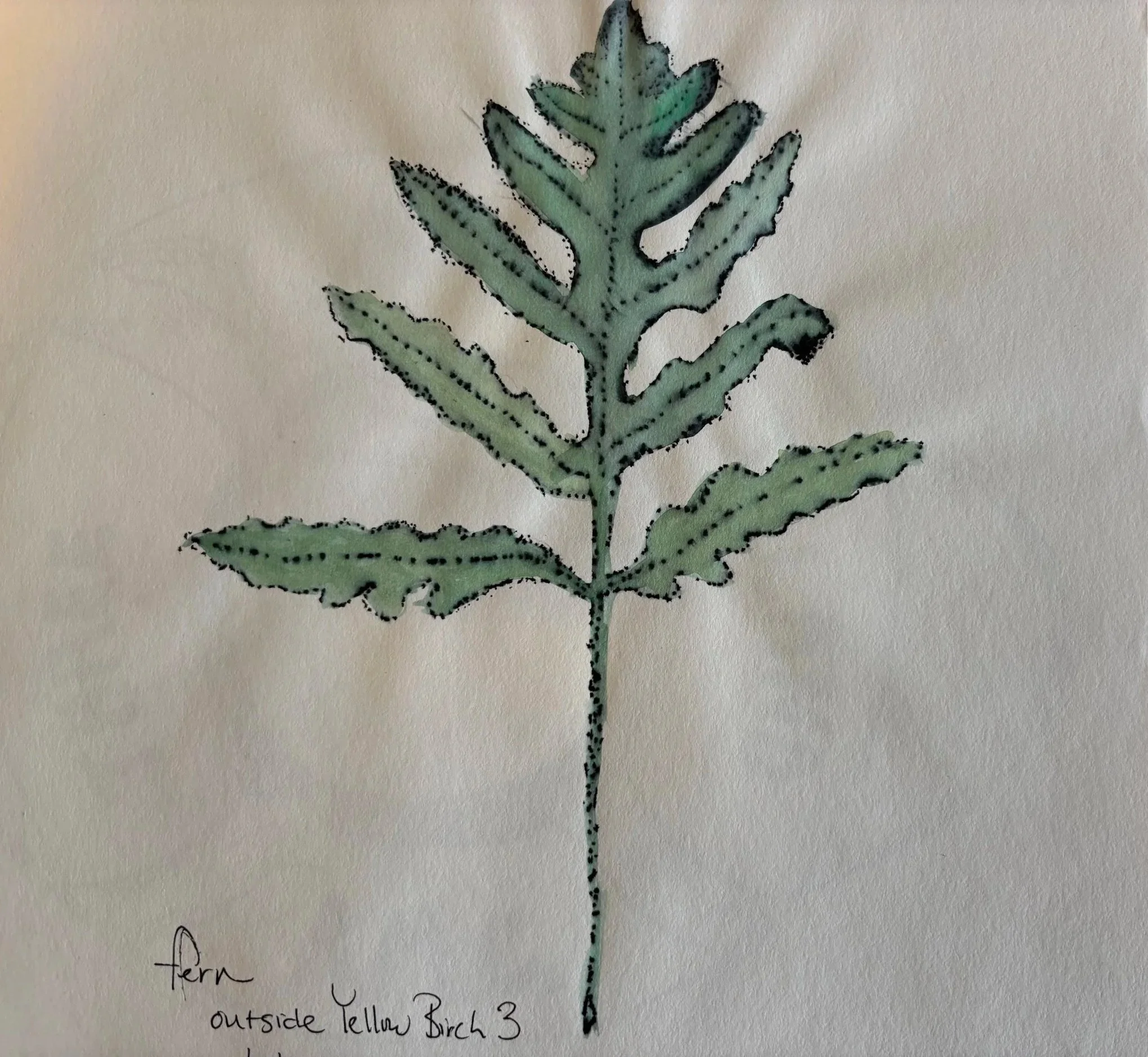
Field Sketch and Botanical Illustration
Facilitator: Jo Raines
Creating field sketches and botanical illustrations teaches people how to really see their environment, and to connect with it in an intimate way. Furthermore, it helps us practice filtering out the noise of everyday life and allows us to focus on the beauty of the natural world as represented by a single leaf, pine cone, or flower. The act of making art in a group creates community by allowing people to share their creative thoughts, celebrate each other’s achievements and support each other’s challenges.
As a member of this creative community, you will be offered an array of media to create sketches and illustrations (e.g., pencils, charcoal, and pen and ink). Each session will begin with a brief field trip to a different secluded spot on the island, where we will practice the art of field sketching. The remainder of the session will be spent in a comfortable spot where we can share our field sketches and practice botanical illustration using plant materials that we have collected. All levels of experience are welcome, and everyone is encouraged to create at their own pace. You will take home a sketchbook filled with your original artwork and memories of the beauty that surrounds us on the island, as well as the joy of creating art with others.
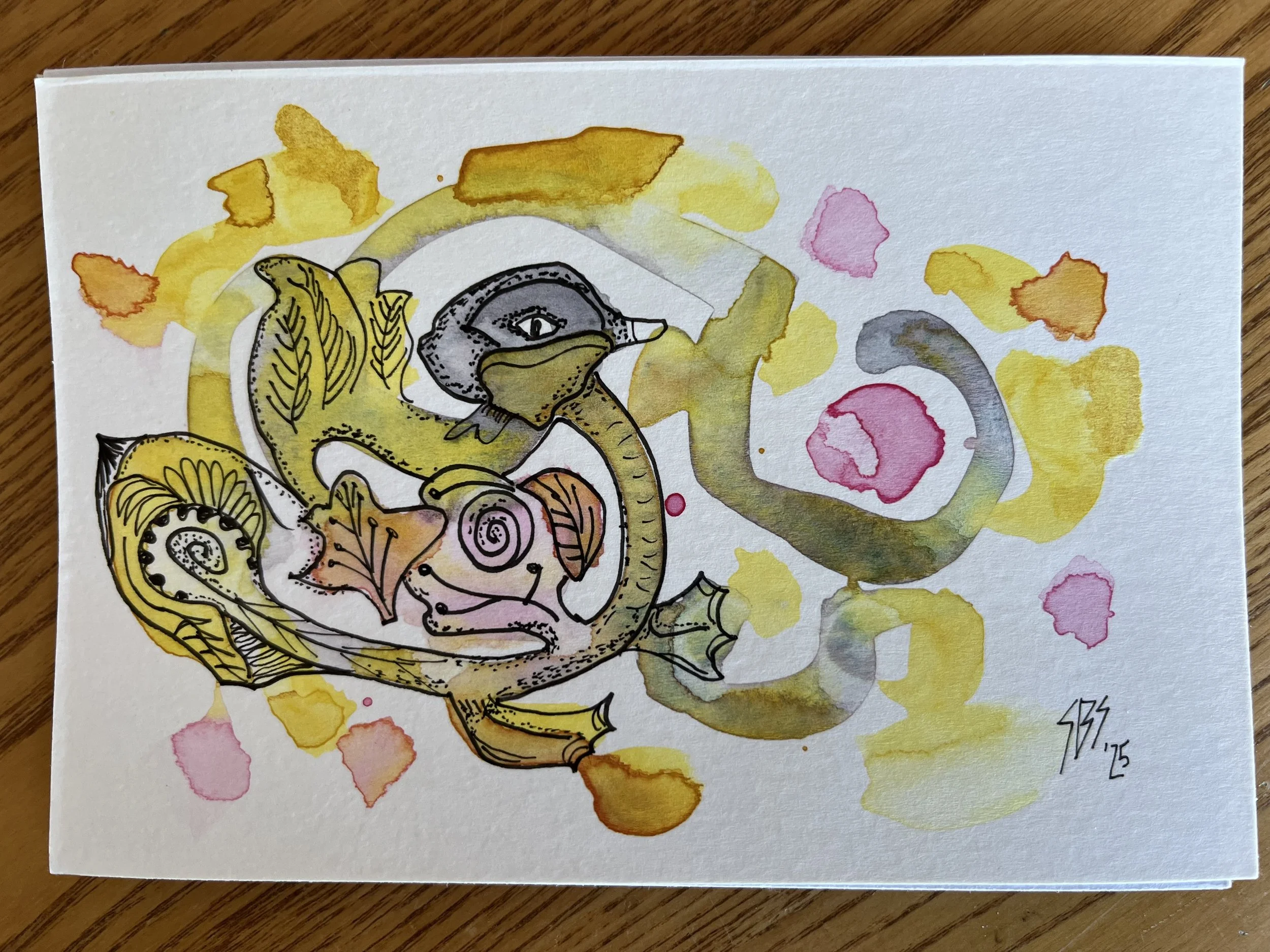
A Little Art Every Day
Facilitator: Sharon Santillo
You have not drawn since you were nine? Or, you have drifted away from art? This class is for all levels, especially your friends who think they are not creative enough to come to Creators Week. In our creative community, you will build a fun habit of making art every day. Research shows that any kind of art-making, even scribbling, benefits us physically and emotionally. We will find inspiration in imagination and in the natural world around us and always leave our two sketchbooks with the start of ideas for the next day. No blank-page anxiety for us. All supplies provided, and feel free to bring any supplies of your own.
Spiritual Journaling within a Creative Community
THIS COMMUNITY IS FULL. PLEASE MAKE ANOTHER SELECTION
Facilitator: Andrea Grace Weaver
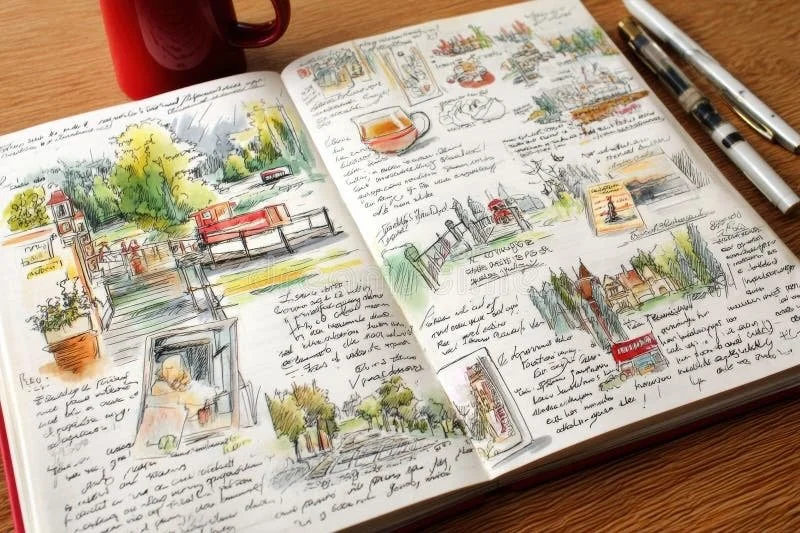
Journaling is a tried-and-true way to learn about ourselves. Many have found journaling also a way to connect with the Divine — known by many names, images and traditions, and none at all. Within this creative community, you will have the opportunity to explore a wide variety of types of journaling — from acrostic poems to letters, gratitude lists to contemplative photography. Some of these practices will help us explore the magnificent natural world and our connection to it. You will be invited to share your writing, in doing so, you will foster connections that weave community. At the conclusion of Creators Week, you will leave with a journal as well as a “backpack” of journaling activities you can use in the future.
Story Fragments: Weaving Nature, Memory, and Meaning
THIS COMMUNITY IS FULL. PLEASE MAKE ANOTHER SELECTION
Facilitator: Emily Arnold
In yoga, there is a practice called pratyahara, often described as a turning of our attention inward. Instead of being pulled around by every sound, sight, or thought, we pause and really notice what’s here. In this community, we’ll treat our time on the island as a week-long pratyahara practice, using our senses not to get overwhelmed, but to quietly listen for what feels meaningful, beautiful, or alive in the everyday.
Each day we’ll slow down enough to feel the breeze, notice the light on the water, or overhear a small moment of conversation — and then gently turn that experience inward, asking what it stirs in us. From there, we’ll create simple “story fragments” in words or small sculptures made from found natural materials. This is pratyahara as finding the sacred in the mundane: letting our senses open the door, and then following the thread inward to insight, imagination, and connection.
Fiber Arts: Working with Wool
THIS COMMUNITY IS FULL. PLEASE MAKE ANOTHER SELECTION
Facilitator: Kristin Husher
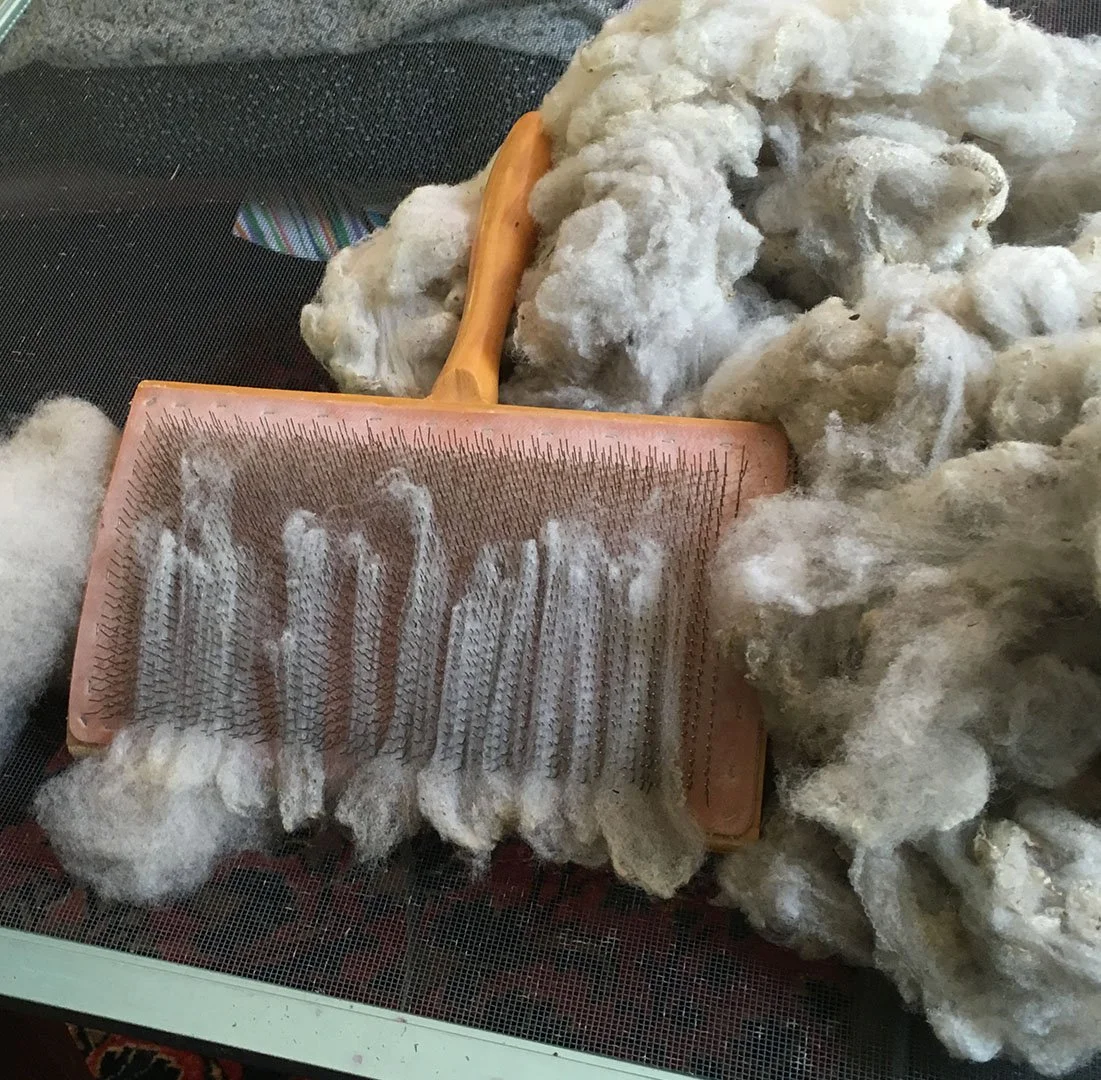
Learning how to spin goes back to the dawn of time. Civilizations that learned how to manage wool to make yarn, then to make socks and other items that conform to human shape, were able to cope with weather and adversity! Drop spindling is the gateway to spinning, dyeing, and using natural fibers to create limitless items.
As a member of this creative community, you will have the opportunity to work with wool and alpaca to spin your own fiber, exploring everything from color selection to hand carding to preparing the wool to mastering the drop spindle. If there’s enough time you can use that fiber to knit or crochet a headband or embellish one that is already crafted from handspun fiber.
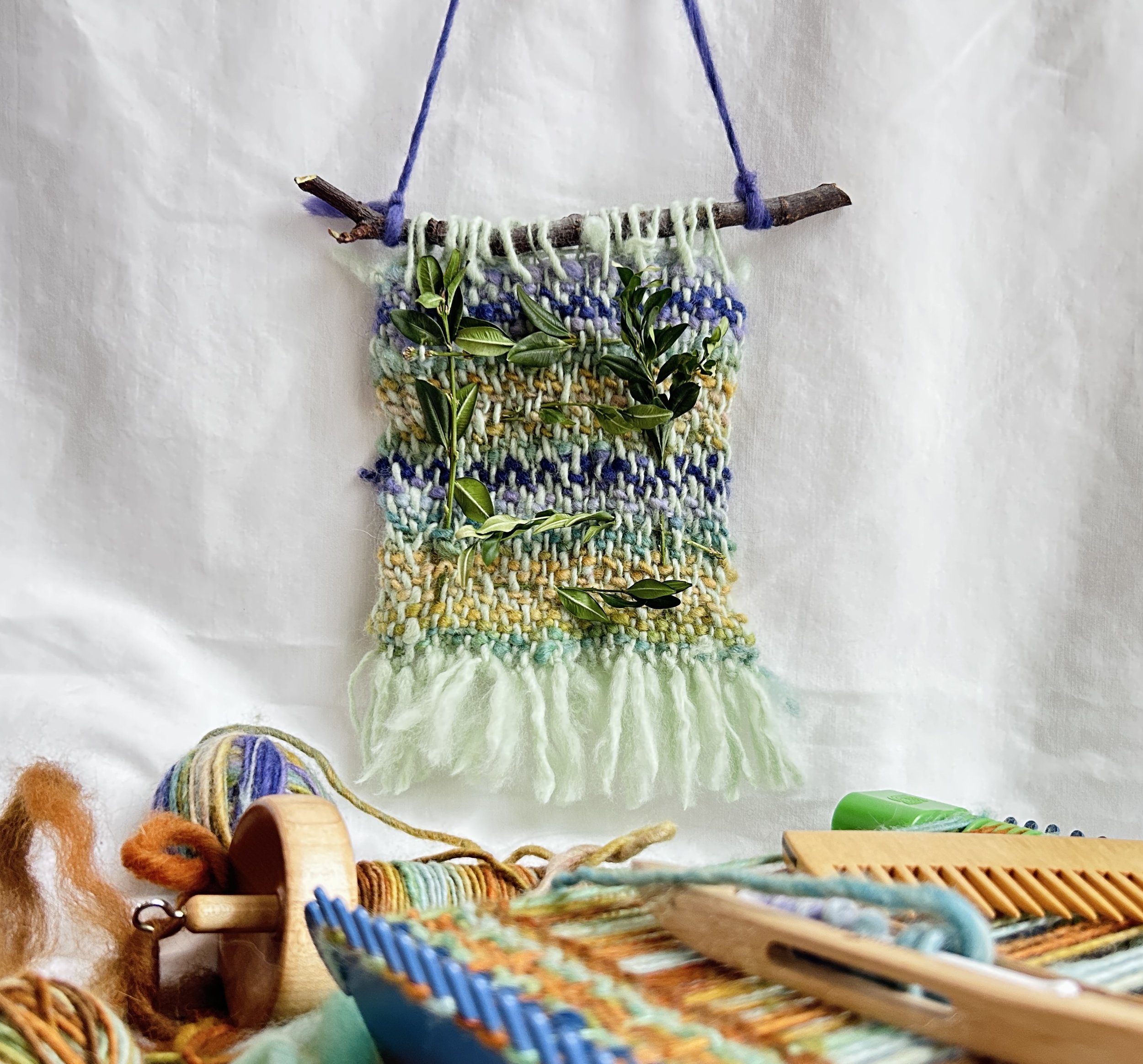
Creative Tapestry Weaving
Facilitator: Haley Houseman
This beginner-friendly creative community invites you to slow down and explore creativity through fiber, weaving, and nature. We’ll learn the basics of tapestry weaving, experimenting with texture, color, recycled materials, and found natural objects to create an experimental wall hanging that captures the spirit of Three Mile Island. With an emphasis on curiosity and hands-on discovery over perfection, you will leave with finished pieces, tools to continue at home, and a deeper understanding of how natural materials can create joy and art.
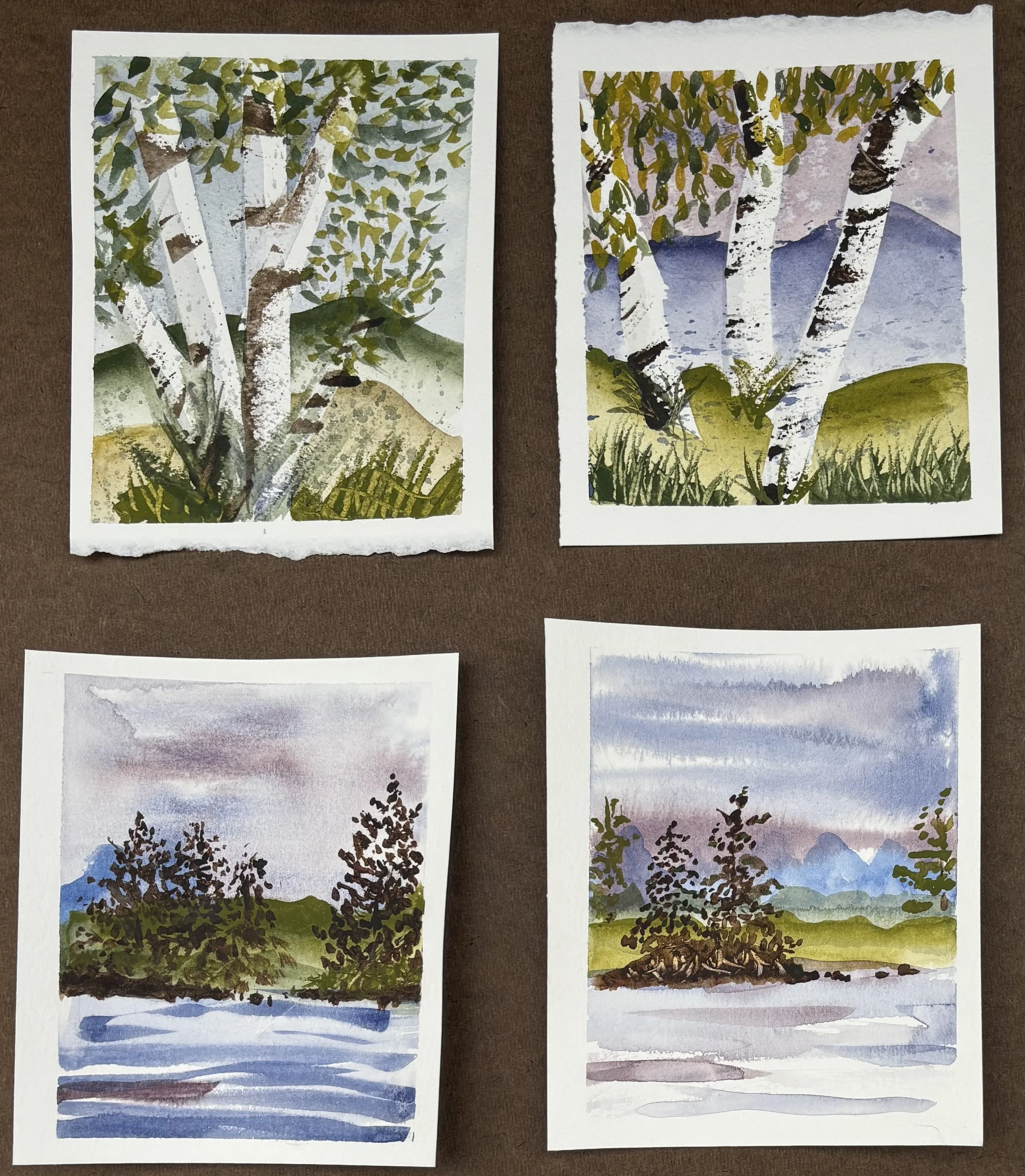
Watercolor Painting
Facilitator:Amanda Cooley Barry
Have you always wanted to try watercolor painting but believe that it’s too hard? Or have you tried it but been disappointed with the results? Do you love to be in a “creativity zone” where all thoughts quiet down and there is only color and shapes? Or do you wish you could play around with watercolor while in a gorgeous setting?
Join us for a fun, experiential watercolor creative community where there will be several exercises to learn about the watercolor medium and how to have it work for you rather than the other way around. There will also be two (or three depending on interest) guided compositions: an island inspired by Nabby Island and an abstract composition with birch trees. You’ll have an opportunity to crop and mount your pieces. You’ll go home with not only memories of Three Mile Island and a new understanding of watercolor painting but also your creations mounted either into a frame or into a 5” x 7” book.
The focus of the workshop will be on beginners but those with experience are welcome to join and share their knowledge.
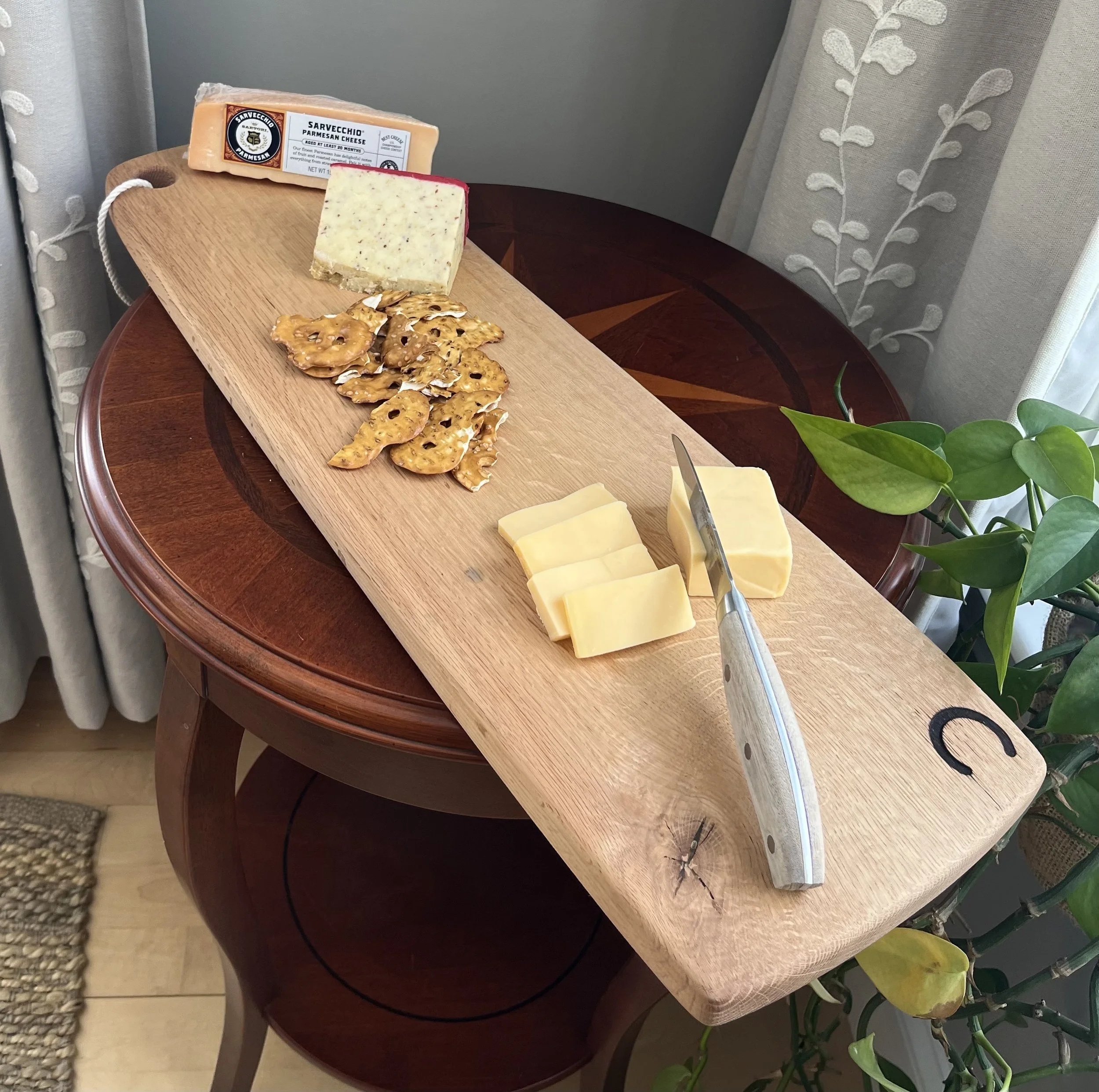
Handmade Wooden Boards
THIS COMMUNITY IS FULL. PLEASE MAKE ANOTHER SELECTION
Facilitator: Sam Bridge
Have you ever wanted the chance to create your own custom, handmade charcuterie, cutting, or serving board? This is your opportunity! As we gather on the dock and draw inspiration from the beauty and tranquility of the lake and the island, each of us will learn how to create a functional and charming piece of art.
As a member of this creative community, you will have the rare opportunity to use some red oak from a tree that was felled and milled on Three Mile Island, as well as other local native hardwoods. You will work directly with the instructor in laying out the design, shape, materials, texture, features, and the finishing process. Completed boards will then be personalized through wood burning, branding, stamping or a combination of all three. Typical boards will measure about 10" wide x 20" long, but each board will have its own unique shape and dimensions.
You will learn how to safely use a spokeshave, jigsaw, palm router, orbital sander, drill press, and wood burning tool. We will cover woodworking safety procedures and personal protective equipment. Additionally, we will discuss basic woodworking, hand and power tool use, identifying and handling hardwoods, finishing, and shop etiquette. You will leave the island with your own one-of-a-kind board and the knowledge and skill of how to make it.
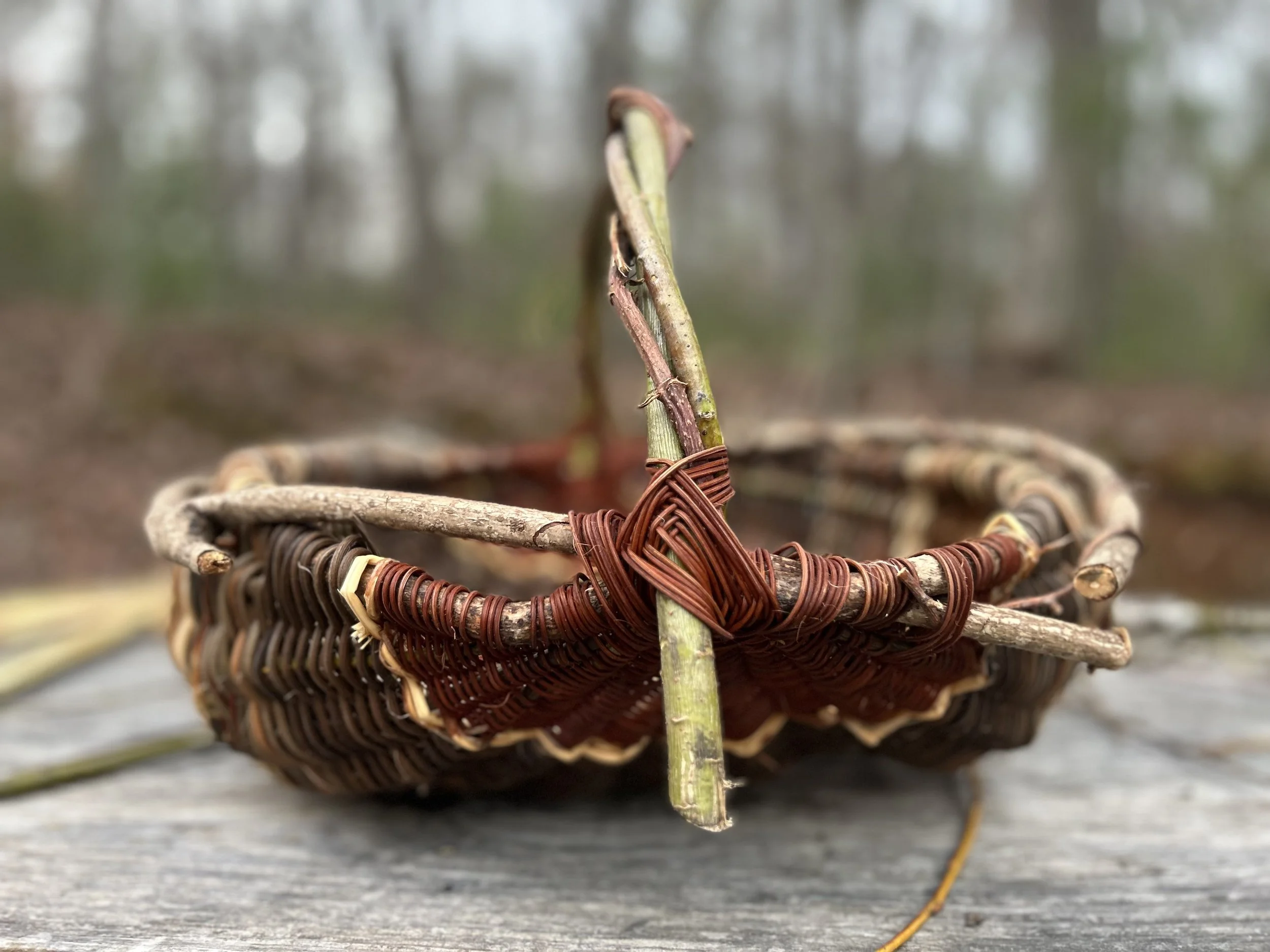
Wild Foraged Vine Basketry
THIS COMMUNITY IS CLOSED. PLEASE MAKE ANOTHER SELECTION
Facilitator: Katie Hayes
This creative community invites you to slow down, connect with the landscape, and learn the art of weaving baskets from wild, responsibly sourced vines such as grapevine, honeysuckle, and other flexible plant fibers available seasonally. Together, we’ll explore how natural materials can be transformed into functional and beautiful objects using simple, accessible techniques.
This is a deeply hands-on, beginner-friendly experience designed to help you feel comfortable working with natural materials, even if you’ve never made anything like this before. As a creative community member, you will learn how to select, prepare, and shape vine materials and will create either a functional basket or a sculptural woven vessel based on your interests. Over three morning sessions, we will move from meeting and understanding the materials, into building strong forms, and finally into finishing and personalizing each piece. Along the way, we will discuss ethical foraging practices, seasonality, and the long history of basketry as one of humanity’s oldest and most universal art forms. The weaving process naturally encourages conversation, reflection, and connection.
My goal is to create a welcoming creative space where you can relax, try something new, and reconnect with both your creativity and the natural world around you. You will leave with a finished handcrafted piece, foundational weaving skills, and the confidence to continue working with natural materials beyond Creators Week.
Writing a First Draft:
You Can Do It!
Facilitator: Eunice Scarfe
If you’ve lived, you have a story; if you can tell it, you can write it; if you don’t write it, who will? In this session you’ll be invited to write what you like without fear of failure … to begin a story you remember or one you invent … to write how it was or how it ought to have been. Each day you’ll be invited to write first drafts — that stage where you let the pen follow rather than lead, where you are often surprised by what appears on your page and you don’t worry about perfection; where you discover what has been waiting for you to write. First drafts are not about finishing. They are about exploring. First drafts produce pages from which a complete story or article or poem can be composed. You’ll go home with several first drafts, and perhaps even a finished one!
The page waits, pretending to be blank. Margaret Atwood
Creator’s Week Registration
Don’t forget to register below!
Cancellations received by August 21, 2026 will be honored with a full refund minus a $50 processing fee. We are not able to refund the registration fee for cancellations received after August 21, 2026.
If you need to cancel, please send an email to Sandy Brawders at sgbrawders@gmail.com
Meet Our 2026 Creative Community Facilitators
Emily Arnold, Story Fragments: Weaving Nature, Memory, and Meaning
Emily is a poet, professional facilitator, and yoga teacher. She holds an undergraduate degree in creative writing and environmental studies from Georgetown University and a master’s degree in development studies from the University of Cambridge. Professionally, she designs and facilitates experiential learning programs for adults in research commercialization and startup acceleration. Her work includes creating immersive peer-learning curricula that encourage creativity, reflection, and shared discovery. She integrates principles from Theory U, drawing on Jungian and anthroposophical frameworks for deep listening and collective insight. As a 500-hour certified teacher in vinyasa and Jivamukti yoga, Emily brings practices of pranayama, meditation, and embodiment into all her programs. Her background in designing transformative learning experiences and her own artistic practice as a poet, singer, and illustrator make her uniquely skilled in guiding creative exploration. She believes art is a way of connecting deeply to place, discovering community, and engaging with stillness.
Amanda Cooley Barry, Watercolor Painting
I’ve been painting watercolors for the past 10+ years. I have run workshops for small groups — including at Creators Week — that have been very popular.
Sam Bridge, Handmade Wooden Boards
I have been a professional woodworker for over 25 years. I got my start while on the summer Croo at Three Mile in the 1990s, then became the maintenance supervisor there in the early 2000s when the New Castle (composting outhouse), Launch House and main dock were all being rebuilt. As a volunteer on the island, I contributed to the construction of four new camper cabins.
I have taught and trained many employees, Croo, and volunteers in carpentry and woodworking projects both on TMI and professionally. While living and working in the Boston area, I attended the North Bennett Street School for Carpentry and Woodworking in 2001-2002. Currently I specialize in cabinet- and furniture-making out of my shop in southern Maine and in the past have worked in the residential carpentry and remodeling industry.
Katie Hayes, Wild Foraged Vine Basketry
I am an artist, educator, and community program leader with over 20 years of experience designing and facilitating creative learning experiences in community, nonprofit, and outdoor education settings. My work centers on natural materials, hand-building processes, and helping people reconnect to creativity through hands-on, approachable making. I was first drawn to working with natural materials through time spent outdoors at summer camps and in rural environments, where creativity, nature, and independence were deeply connected. Those experiences shaped both my creative practice and my teaching style. Today, I work primarily with clay, fiber, and found natural materials, with a strong focus on traditional handcraft processes and place-based making. I have experience teaching arts and crafts, natural material projects, and hand-building techniques in both formal and informal settings. I have led community workshops, youth programming, creative camps, and public-facing art experiences, and I specialize in creating welcoming spaces where beginners feel comfortable trying something new while more experienced makers can explore personal expression. My teaching approach emphasizes patience, curiosity, and respect for both materials and people. I am especially passionate about helping participants slow down, build confidence, and experience the grounding and connective power of working with natural materials and traditional craft practices. I believe everyone is creative, and nature gives us some of the best tools to rediscover that.
Haley Houseman, Creative Tapestry Weaving
Haley is a lifelong sewist who learned at her mother’s side as soon as she could reach the foot pedal. With a deep family history of textile and craft education, she brings generations of knowledge to the classroom — along with a love of making that spans projects using all sorts of materials. She has taught sewing, spinning, and weaving to beginners and returning makers through private sessions, women’s clubs, and pop-up studios across the Boston area. Based in Massachusetts, Haley is also a writer who explores craft, material culture, and environmental history in her work. Her classes aim to demystify the crafts we yearn to learn and are rooted in skill-building, experimentation, and storytelling, helping students feel at home with their tools and confidently bring their ideas to life.
Kristin Husher, Fiber Arts: Working with Wool
I learned to knit at the age of four at my grandmother's elbow. I have been fascinated by the fiber arts and learned to spin, dye, and process fleeces over the past 25 years. I still love to knit and to enable fiber lovers to create their own projects. I have taught beginning drop spindling, beginning wheel spinning, and dyeing using both natural materials and commercial dyes. I am laid back, enjoy a good joke, and have lots of stories. I teach all ages. I am very proud of some of my youngest students who are now launched into the world with their love of spinning.
Sharon Santillo, A Little Art Every Day
Sharon Santillo is a mixed-media artist who wakes every morning and can’t wait to get to her art table and play. A public school teacher for twenty-seven years, she was chosen Massachusetts Art Educator of the year in 2011. "A Little Art Every Day,” a course she developed from her years of experience, has been chosen for the 2026 curriculum at Chautauqua Institution in New York and for a health study in Massachusetts where physicians will write a prescription for selected patients to take the course. Sharon is delighted to be returning to Creator’s Week as a community facilitator and share her love of the outdoors, sketchbooks, and the peace and contentment that comes with making a little art every day.
Eunice Scarfe, Writing a First Draft: You Can Do It!
I trained as an English teacher but after several years of teaching, I began to write fiction — without warning or really planning to. Writing fiction soon became a full-time occupation and a life-long companion. No one can fire you from the work of writing fiction! I completed an MA in English (creative writing thesis), for which I wrote a novel, “Sing Sorrow.” I designed a summer writing program at the university and taught in it for the next twenty years. I also launched my own company, Saga Seminars, through which I have taught workshops across North America. My writing has received grants from Canada Council and the Alberta Foundation for the Arts; has been awarded first prize for short fiction from Malahat Review (U of Victoria BC) and Event magazine (U of Alaska); and has been published in numerous anthologies and little magazines including NeWest Press, Fifth House, Coteau Press and Best Stories in Canada.\
Jo Raines, Field Sketch and Botanical Illustration
I learned about botanical illustration and field sketching as an undergraduate at Colby College and was commissioned by the Nature Conservancy to illustrate one of their educational pamphlets, describing some of the plants that Henry David Thoreau would have seen during his explorations in Maine. As an elementary science and STEAM (Science, Technology, Engineering, Art, Math) teacher, I taught students to see their world and record it using field sketching and botanical illustration. My students would observe and sketch a vernal pool in fall, winter, and spring. Since retiring in June of 2025 I have been in full creative mode, dividing my time between playing my fiddle in several musical groups as well as creating acrylic paintings of subjects ranging from citrus fruits to musical instruments.
AndreaGrace Weaver, Spiritual Journaling within a Creative Community
AndreaGrace is a dynamic, joy-filled gatherer, presenter, and trainer with more than 30 years of leading both spiritual and intergenerational workshops at the local and national levels.